

Stablecoins vs Fiat: Protect Your Money Now
In This Article
Quick overview
Stablecoins vs Fiat: Protect Your Money Now
Stablecoins vs Traditional Currency Why holding your national currency might be costing you money. For millions in emerging markets, the answer isn’t hypothetical—it’s measurable in lost purchasing power every single month. While developed economies debate inflation rates of 2-3%, countries like Nigeria, Argentina, and Turkey face a starker reality: holding cash means watching your wealth […]

Why this matters
Stablecoins vs Traditional Currency
Why holding your national currency might be costing you money. For millions in emerging markets, the answer isn’t hypothetical—it’s measurable in lost purchasing power every single month. While developed economies debate inflation rates of 2-3%, countries like Nigeria, Argentina, and Turkey face a starker reality: holding cash means watching your wealth evaporate in real-time.
The Silent Tax: When Inflation Outpaces
The core issue plaguing savers in high-inflation economies is the negative real interest rate—the gap between what your bank pays you and what inflation takes away. In Nigeria, where inflation has hovered between 15-25% in recent years, the average savings account yields 2-4% annually. The math is brutal: a 20% loss in purchasing power every year, compounded.
Argentina tells an even more extreme story. With inflation exceeding 100% in 2023, holding pesos became a guaranteed path to poverty. A salary that bought groceries for a month in January would barely cover two weeks by December. Traditional banking offers no refuge when the entire monetary system is in freefall.
Enter stablecoins: cryptocurrencies pegged to stable assets like the US dollar. USDT (Tether), USDC (USD Coin), and other dollar-backed tokens offer something revolutionary for emerging market residents—a digital escape hatch from currency depreciation.
Purchasing Power Preservation: A Tale of Two Strategies
Let’s run the numbers with a real-world scenario.
Scenario A: You hold ₦100,000 in a Nigerian bank account earning 3% annual interest.
Scenario B: You convert ₦100,000 to USDT and hold it in a digital wallet.
After 12 months with 18% inflation:
– Naira holder: ₦103,000 nominal value, but purchasing power equivalent to ₦84,460 from the previous year (-15.5% real loss)
– USDT holder: Still holds the equivalent dollar value, which has maintained its purchasing power against the Naira’s depreciation
The divergence becomes catastrophic over longer periods. Over 24 months in a 20% inflation environment, the Naira holder loses approximately 30% of real purchasing power, while the stablecoin holder preserves their position relative to a stable benchmark.
But stablecoins offer more than just preservation. Decentralised finance (DeFi) platforms now offer 3-8% annual yields on stablecoin deposits—actual positive returns that widen the gap even further. A Nigerian holding USDT in yield-generating protocols can earn while protecting against Naira depreciation, creating a double advantage.
The Honest Risk Assessment
Fair analysis demands acknowledging the risks. Stablecoins aren’t government-insured. Depegging events—though rare—have occurred (remember UST’s collapse in 2022). Regulatory crackdowns could limit access or create legal ambiguity. Platform risks mean your funds are only as secure as the exchange or wallet you choose.
Yet for many in hyperinflation environments, these risks pale compared to the guaranteed erosion of holding local currency. It’s the difference between potential risk and certain loss.
The Great Migration: Stablecoin Adoption Patterns
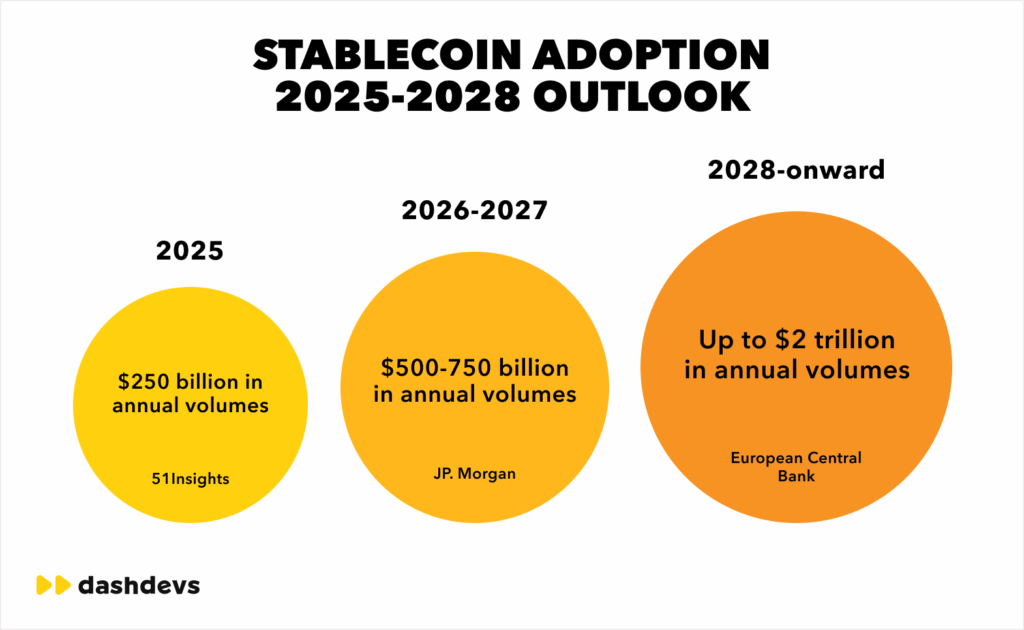
Data reveals a clear pattern: stablecoin adoption surges in economies with currency instability.
Africa has seen explosive growth. Nigeria, Kenya, and Ghana rank among the top countries globally for peer-to-peer crypto trading volume, with stablecoins dominating transactions. Capital controls in Nigeria—limiting official dollar access to $100/month for individuals—have pushed citizens toward digital alternatives.
Latin America tells a similar story. Argentina and Venezuela lead regional adoption, driven by populations desperate to escape currency collapse. Stablecoins serve as de facto savings accounts and payment rails where traditional systems have failed.
Southeast Asia, while less volatile, shows steady growth as users recognise stablecoins‘ utility for remittances and cross-border commerce. A Filipino overseas worker can send USDT home instantly for minimal fees, bypassing the 6-12% costs traditional remittance services charge.
Three Economic Drivers
1. Inflation Hedging: The primary driver remains purchasing power preservation
2. Capital Control Circumvention: Access to dollar-denominated assets when governments restrict foreign currency
3. Financial Infrastructure: Stablecoins work 24/7, cross borders instantly, and require only internet access
The Verdict: Financial Self-Defense
Stablecoins have emerged as a form of economic self-defense in unstable monetary environments. They’re not replacing national currencies entirely—most users still need local money for daily transactions. Instead, they’re filling a critical gap: a stable store of value accessible to anyone with a smartphone.
For the inflation-conscious investor or emerging market resident, the calculation is increasingly clear. While developed markets debate crypto’s volatility, those facing 20%, 50%, or 100%+ annual inflation have already done the math. The volatility they fear isn’t Bitcoin’s price swings—it’s their own currency’s predictable decline.
Platforms like Xbankang are democratizing access to this financial shift, offering instant conversion between local currencies and stablecoins at competitive rates. The ability to move seamlessly between Naira and USDT, or to trade digital assets quickly when needed, transforms stablecoins from a theoretical advantage into practical financial protection.
The value shift isn’t coming—it’s already here. The question is no longer whether stablecoins can preserve wealth better than unstable fiat currencies. For millions, that question is settled. The real question now is: how quickly will the rest of the world catch on?
Frequently Asked Questions
Q: Are stablecoins actually stable, or can they lose value?
A: Most major stablecoins like USDT and USDC are pegged 1:1 to the US dollar and maintain that peg through reserve backing. While rare depegging events have occurred (like UST in 2022), established stablecoins backed by actual dollar reserves have proven remarkably stable. However, they do carry the US dollar’s inflation rate (2-4% typically), which is still far better than 15-100%+ inflation in many emerging markets.
Q: How do I actually convert my local currency to stablecoins?
A: You can use cryptocurrency exchanges and trading platforms that support your local currency. Platforms like Xbankang offer direct conversion from currencies like Nigerian Naira to stablecoins like USDT, with instant processing and competitive rates. You’ll need a digital wallet to store your stablecoins and a bank account or mobile money for the initial deposit.
Q: What are the main risks of holding stablecoins instead of my national currency?
A: Key risks include: regulatory uncertainty (governments may restrict crypto access), platform risk (exchanges can be hacked or fail), depegging risk (stablecoin losing its dollar peg), and lack of government insurance. However, for those in high-inflation environments, these potential risks often compare favorably to the guaranteed purchasing power loss of holding rapidly depreciating local currency.
Q: Can I earn interest on stablecoins like I would with a bank savings account?
A: Yes, and often at much higher rates. DeFi platforms and crypto lending services offer 3-8% annual yields on stablecoins, significantly higher than most emerging market bank accounts when adjusted for inflation. These yields come from lending your stablecoins to borrowers, though they carry their own risks including smart contract vulnerabilities and platform solvency.