

Meme Coin Scam: Inside the $20K Daily Trap
In This Article
Quick overview
Meme Coin Scam: Inside the $20K Daily Trap
The $20K Daily Meme Coin Scam Economy Explained Meme coin scammers can make $20K per day – here’s the shocking breakdown. While legitimate cryptocurrency projects struggle to find product-market fit and build sustainable communities, a parallel economy of sophisticated fraud operators has perfected the art of extracting wealth from speculative investors at an industrial scale. […]
Why this matters
The $20K Daily Meme Coin Scam Economy Explained
Meme coin scammers can make $20K per day – here’s the shocking breakdown. While legitimate cryptocurrency projects struggle to find product-market fit and build sustainable communities, a parallel economy of sophisticated fraud operators has perfected the art of extracting wealth from speculative investors at an industrial scale. Understanding the financial mechanics behind these operations reveals not just how scammers profit, but why the meme coin phenomenon has become one of the most lucrative fraud vectors in modern finance.
The Mathematics of Manufactured Hype
The $20,000 daily figure isn’t hyperbole—it’s actually conservative for successful operations. The profit model behind meme coin scams follows a predictable mathematical formula that maximizes extraction while minimizing effort and legal exposure.
A typical operation begins with token creation, costing approximately $2-5 on Solana (compared to $500+ on Ethereum). The scammer mints 1 billion tokens, keeping 200-300 million (20-30%) while adding the remainder to a liquidity pool with a modest initial investment—often just $500-1,000 worth of SOL.
The magic happens in the markup. When that initial liquidity pool is created, the scammer effectively sets the starting price. As early buyers purchase tokens, the automated market maker (AMM) algorithm increases the price according to the constant product formula. With low initial liquidity, even small purchases create dramatic price increases—the psychological hook that attracts momentum traders.
Here’s where the $20K comes in: A scammer holding 200 million tokens in a coin that reaches a $100K market cap (modest by meme coin standards) owns $20,000 worth of tokens. By gradually selling into rising prices, or executing a sudden “rug pull” by removing liquidity, that value becomes realized profit. Successful operators run multiple tokens simultaneously, with a hit rate of perhaps 1 in 10 gaining meaningful traction. Even with a 90% failure rate, a single successful scam per week generates monthly revenues exceeding $80,000.
The revenue model scales with sophistication. Advanced operators employ wash trading—simultaneously buying and selling using multiple wallets—to create the appearance of organic volume. This costs essentially nothing (only blockchain fees) but dramatically increases the perceived legitimacy. One investigation found scammers spending $300 on wash trading that generated an apparent volume of $2 million, attracting genuine investors who contributed $150,000 in real capital.
Solana: The Scammer’s Blockchain of Choice
While meme coin scams exist across all blockchains, Solana has emerged as the undisputed platform of choice for fraud operators. The reasons are technical, economic, and cultural.
From a technical perspective, Solana’s architecture enables rapid deployment. The SPL token standard allows anyone to create a new token in minutes without smart contract programming knowledge. Platforms like pump.fun have gamified this process, providing interfaces where token creation requires nothing more than uploading an image, writing a description, and clicking “create.” The barrier to entry has essentially disappeared.
Transaction speed matters enormously for scam economics. Solana’s sub-second finality means scammers can execute rug pulls before victims can react. On Ethereum, block times of 12+ seconds provide a window for sophisticated traders to frontrun or escape. On Solana, by the time you see the liquidity removal transaction, it’s already irreversible. This asymmetry favors the scammer dramatically.
The economic advantages are equally compelling. Ethereum gas fees during periods of network congestion can reach $50-200 per transaction, making small-scale scams unprofitable. A scammer would need to extract thousands of dollars to justify the operational costs. Solana’s fees, typically $0.00025 per transaction, mean profitability starts at just a few hundred dollars. This enables the “spray and pray” approach—launching dozens of tokens knowing most will fail, because the cost of failure is negligible.
Perhaps most importantly, Solana has cultivated a cultural moment around meme coins. The blockchain’s association with high-risk, high-reward speculation has created a self-reinforcing cycle. Traders come to Solana specifically seeking 100x moonshots, making them pre-qualified marks with high risk tolerance. The presence of legitimate breakout successes (tokens that genuinely grew from micro-caps to meaningful valuations) provides cover and plausible deniability for scammers. “Anyone could be the next big thing” becomes the rationalization that overrides due diligence.
The community dynamics on Solana differ from Ethereum’s DeFi-focused culture or Bitcoin’s store-of-value ethos. Solana’s identity has become intertwined with speed, low costs, and degenerate gambling—the exact conditions scammers need. When a blockchain’s culture celebrates risk-taking and dismisses caution as “NGMI” (not gonna make it) mentality, fraud flourishes.
The Industrial Infrastructure of Fraud
What separates today’s meme coin scams from earlier cryptocurrency fraud is the emergence of a professional service ecosystem that industrializes every aspect of the operation. Scamming has evolved from individual opportunism to a sophisticated industry with specialized tools, services, and marketplaces.
Token Launch Platforms: Services like pump.fun didn’t create scams, but they’ve certainly streamlined them. These platforms handle the technical complexity of token creation, liquidity pool establishment, and initial distribution. They’ve essentially become the Shopify of fraud—turnkey solutions that democratize access to scam infrastructure. Pump.fun alone has facilitated the creation of over 2 million tokens, with the platform taking a small fee from each. The platform maintains deniability by arguing they simply provide neutral infrastructure, but the business model depends on volume, not legitimacy.
Bot Networks and Automation: Sophisticated scammers deploy extensive bot networks that simulate organic community activity. These services, advertised in Telegram channels and dark web marketplaces, offer packages: 1,000 Twitter followers for $50, 500 Telegram members for $30, automated replies and engagement for $100/week. The bots don’t just inflate numbers—they create the social proof that attracts genuine investors. Seeing “active” discussions and community enthusiasm triggers FOMO (fear of missing out), the psychological vulnerability scammers exploit.
Market Making Services: Professional wash trading services have emerged, operated by individuals who maintain wallet farms specifically for creating artificial volume. A scammer can hire these services to generate $1 million in apparent trading volume for $500-1,000, depending on the desired sophistication. Advanced services vary transaction sizes, timing, and wallet addresses to evade detection algorithms. The relationship is purely mercenary—the market maker cares nothing about the token, they simply provide the illusion of liquidity for a fee.
Influencer Networks: Perhaps most cynically, a gray market of social media influencers has developed around paid meme coin promotion. These aren’t traditional influencers disclosing sponsorships—they’re accounts with 50K-500K followers who, for $500-5,000, will enthusiastically shill a token to their audience without disclosure. Some operate on commission, receiving token allocations they can dump on their own followers. The influencer ecosystem creates manufactured virality, the appearance of grassroots momentum that’s actually purchased.
Tutorial and Mentorship Networks: The scam economy has even developed its own educational layer. Telegram channels and Discord servers offer “courses” on meme coin launching, typically charging $500-2,000 for “insider knowledge.” These tutorials teach wallet setup, liquidity pool manipulation, bot deployment, and exit strategies. Some operators claim monthly revenues of $20K-50K just from selling scam tutorials—they’ve essentially created a meta-scam, monetizing the teaching of scams.
Analytics Evasion Tools: As blockchain analytics firms develop detection capabilities, counter-services have emerged offering “privacy” solutions specifically designed to obscure scam indicators. These tools help scammers fragment token holdings across multiple wallets, time transactions to appear organic, and route funds through mixing services. The adversarial relationship between detection and evasion drives continuous innovation on both sides.
The Whale Wallet Strategy
Advanced operators employ the “whale wallet” technique, which deserves special attention for its psychological sophistication. Rather than holding tokens in a single address (which blockchain explorers would flag as a concentrated risk), scammers distribute holdings across multiple wallets sized to appear like independent large investors.
For example, instead of one wallet with 200 million tokens, a scammer might create ten wallets with 20 million tokens each. To analysis tools and potential investors, this looks like ten separate “whales” showing confidence in the project. Some operators take this further, creating apparent buying activity between these wallets—one “whale” selling to another—to simulate smart money accumulation.
The psychological impact is significant. Retail investors often copy whale behavior, assuming these large holders have information or analysis capabilities they lack. When multiple apparent whales seem to be accumulating, it triggers powerful social proof. The retail investor thinks: “If these sophisticated players are buying, they must know something I don’t.” In reality, they’re all the same scammer.
The Timing Game: Exit Strategies
The most critical skill in the scam economy isn’t launching tokens—it’s executing profitable exits. Timing determines whether a scammer nets $2,000 or $200,000 from the same operation.
The “slow bleed” strategy involves gradually selling tokens into rising prices, taking advantage of momentum without triggering panic. Sophisticated operators use multiple wallets to sell in quantities that appear like normal trading activity, typically keeping individual sales below 1-2% of daily volume. This approach maximizes profit extraction over days or weeks, though it requires monitoring and risks missing the optimal exit if momentum collapses.
The “instant rug” remains popular for its simplicity and psychological finality. Once token price peaks—often identifiable by parabolic chart patterns and extreme social media hype—the scammer removes all liquidity from the pool in a single transaction. Token holders find themselves unable to sell, as there’s no longer a market. The scammer walks away with the entire liquidity pool. While this strategy caps profit at the liquidity pool value (leaving tokens unsold), it eliminates execution risk and creates clean breaks.
Hybrid approaches have emerged as operators sophisticate. The “double tap” involves an initial selloff that crashes the price 50-70%, causing panic selling from retail investors. The scammer then uses these low prices to quietly reaccumulate, adds liquidity back, promotes a “recovery narrative,” and executes a second exit when prices rise again. This strategy can extract value from the same pool of investors twice.
The Cost of Doing Business: Minimal

What makes the meme coin scam economy so pernicious is the extraordinarily favorable risk-reward ratio. The operational costs are minimal:
– Token creation: $2-5
– Initial liquidity: $500-1,000
– Bot services: $200-500
– Influencer promotion: $500-2,000 (optional)
– Total investment: $1,200-3,500
With potential returns of $20,000+ per successful scam, the ROI exceeds 500-1000%. Even with a 90% failure rate, the economics remain compelling. A scammer launching ten tokens per week at $2,000 each ($20,000 investment) who successfully exits one per week at $20,000 achieves breakeven—and the success rate is typically far better than 10%.
The legal risk, while present, remains relatively low. Cryptocurrency regulation remains fragmented and enforcement under-resourced. Most scammers operate pseudonymously, and cross-jurisdictional enforcement is complex. Even when identified, prosecution requires proving intent to defraud rather than merely poor project management—a high bar. The SEC and CFTC have brought enforcement actions against high-profile rug pulls, but these represent a tiny fraction of the thousands of scams executed monthly.
The Psychological Vulnerabilities
Scammers succeed because they exploit deep psychological vulnerabilities that override rational analysis:
FOMO (Fear of Missing Out): The perception that others are profiting creates powerful urgency. Scammers deliberately create artificial scarcity and momentum to trigger this response. “It’s already up 300% today” becomes the reason to invest immediately without research, when it should be the reason for caution.
Lottery Mentality: Many meme coin investors consciously accept high risk, viewing these investments as lottery tickets rather than serious financial decisions. This mentality shift—from investing to gambling—eliminates the rational restraint that normally governs financial behavior. Scammers position their tokens as potential lottery winners, knowing the dream of 1000x returns overrides skepticism about 99% losses.
Community Belonging: Humans are social creatures seeking tribal affiliation. Scammers create Discord and Telegram communities that provide belonging, inside jokes, shared language, and collective identity. The social reward becomes independent of financial returns. Investors hold losing positions because selling feels like betraying the community, even when the community is manufactured by the scammer.
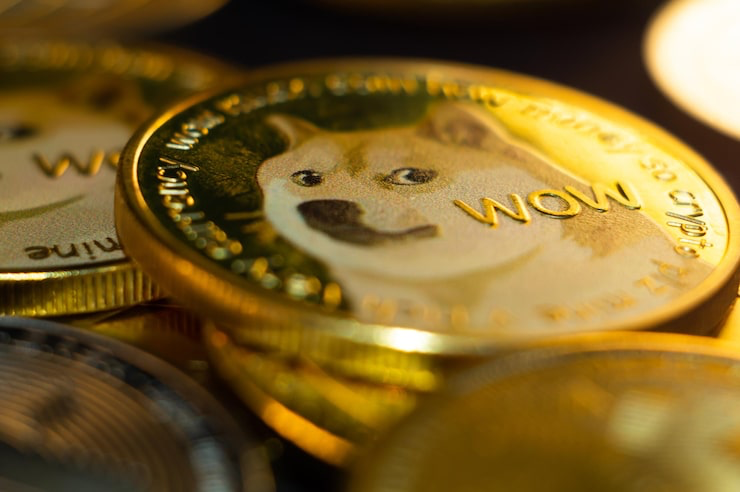
Selective Attention: Survivorship bias means successful meme coins receive disproportionate attention while thousands of failures disappear quietly. Every investor has heard of DOGE or SHIB tokens that created genuine wealth, but few recognize these are extreme outliers in a universe of failed projects. Scammers benefit from this cognitive bias—each victim believes they’ve found the next breakout success.
Conclusion: The Sustainable Scam Economy
The $20K daily meme coin scam economy persists not despite awareness, but because the structural conditions enabling it remain unchanged. Low barriers to entry, minimal costs, high potential returns, limited legal risk, and a constant supply of optimistic investors create a sustainable fraud ecosystem.
For the cryptocurrency industry, meme coin scams represent a reputational crisis and practical barrier to mainstream adoption. Every rug pull reinforces public skepticism about digital assets, conflating legitimate blockchain innovation with predatory fraud. The challenge is that many of the features that make cryptocurrency valuable—permissionless innovation, pseudonymity, decentralization—also make it vulnerable to exploitation.
The solution, if one exists, likely combines technical innovation (better detection tools, platform accountability), regulatory clarity (definitions of fraud in decentralized contexts), and cultural evolution (communities that prize due diligence over momentum). Until these converge, the meme coin scam economy will continue producing its steady stream of daily profits and investor losses.
Frequently Asked Questions
Q: How can scammers consistently make $20K per day from meme coins?
A: Scammers achieve this by retaining 20-30% of token supply during creation, then executing rug pulls or strategic exits when their tokens reach $100K+ market caps. They run multiple token launches simultaneously with low operational costs ($2-5 per token on Solana), so even with a 90% failure rate, one successful scam per week generates $20K+ profits. Advanced operators use wash trading, bot networks, and coordinated social media campaigns to artificially inflate perceived value before extracting real capital from genuine investors.
Q: Why is Solana the preferred blockchain for meme coin scams?
A: Solana offers three critical advantages for scammers: extremely low transaction fees (approximately $0.00025 vs $50-200 on Ethereum), making operations profitable even at small scales; sub-second transaction finality, allowing instant rug pulls before victims can react; and simple token creation through platforms like pump.fun that require no coding knowledge. Additionally, Solana has cultivated a high-risk trading culture that attracts pre-qualified investors with high tolerance for speculation, creating an ideal environment for fraud.
Q: What services and tools enable industrial-scale meme coin fraud?
A: A sophisticated service ecosystem has developed including: token launch platforms like pump.fun that handle technical deployment; bot networks that simulate organic community activity for $50-100; wash trading services creating millions in fake volume for $500-1,000; influencer networks offering paid promotion without disclosure for $500-5,000; and tutorials teaching scam techniques for $500-2,000. This infrastructure industrializes fraud, allowing even technically unsophisticated operators to execute convincing scams with minimal investment.
Q: What are the warning signs of a meme coin scam?
A: Key red flags include: concentrated token holdings in few wallets (suggesting insider control); newly created social media accounts with purchased followers and bot engagement; liquidity pools with very low initial funding that enable dramatic price manipulation; anonymous teams with no verifiable history; excessive marketing promises and ‘guaranteed’ returns; artificial trading volume that doesn’t match community size; and extreme price volatility with coordinated pumping. Tools like blockchain explorers (Solscan, Etherscan) can reveal these patterns, though sophisticated scammers increasingly use multiple wallets and privacy tools to obscure them.
Q: What is the actual financial risk for scammers running these operations?
A: The risk-reward ratio heavily favors scammers. Total operational costs typically range from $1,200-3,500 (including token creation, initial liquidity, bots, and optional promotion), with potential returns of $20,000+ per successful scam—representing 500-1000% ROI. Legal risk remains relatively low due to pseudonymous operation, fragmented cryptocurrency regulation, under-resourced enforcement, cross-jurisdictional complications, and the high bar of proving fraudulent intent versus poor project management. While SEC and CFTC enforcement actions do occur, they represent a tiny fraction of the thousands of monthly scams.